Christmas in July Ho Ho Hold My Beer: Graphics & Crafts Review
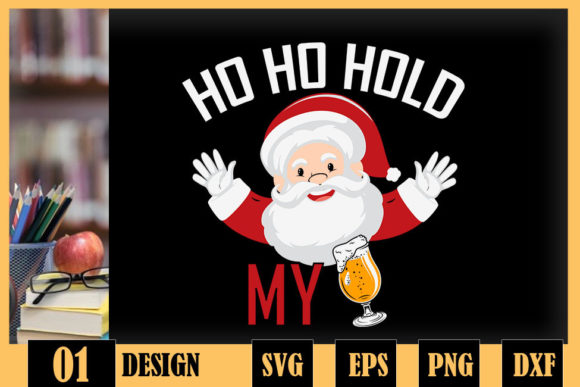
When a digital design asset lands on my desktop, I’m not looking at it as a pretty picture. I’m scanning it like a product prototype. The Christmas in July Ho Ho Hold My Beer graphic arrived with that cheeky, mid-summer party energy that immediately narrows its audience — and that’s a good thing. From a seller’s perspective, specificity sells. This isn’t a generic holiday ornament. It’s a punchline, a mood, a t-shirt waiting to happen at a beach barbecue where someone decided to hang tinsel and crack open cold ones. The visual personality leans playful, casual, and slightly rustic — think bonfire meets Santa hat. The typography, whether it’s a bold sans serif or a hand-lettered script, carries the humor. The phrase “Ho Ho Hold My Beer” instantly signals a buyer who doesn’t take seasonal decor too seriously. That buyer is likely crafting for a gag gift, a party host, or their own ironic summer wardrobe. If you sell in the Etsy or print-on-demand space, you already know that niche humor often outperforms generic beauty. This graphic rides that line.
First Impressions of a Summer Christmas Punchline
Opening the file, I wasn’t expecting refined elegance. I got exactly what the title promised: a design built around the “Christmas in July” theme with a drinking twist. The composition — whether it’s a beer mug illustration paired with the phrase, or a typographic lockup with festive elements like sunglasses and Santa hats — sets a tone that’s equal parts festive and irreverent. The mood is decidedly not formal. It’s backyard-friendly, social-media-ready, and screams for a tank top or a koozie. For a graphic design asset, that strong thematic hook is a powerful listing advantage. It pre-qualifies buyers. Someone searching for “Christmas in July svg” or “funny beer Christmas shirt” knows exactly what they want. This file answers that call without overcomplicating the message. I’d place it firmly in the “conversation starter” category of digital downloads.
The Buyer Psychology Behind the Ho Ho Hold My Beer Phrase
What makes a design sell? Often, it’s the feeling of shared experience. The Christmas in July Ho Ho Hold My Beer graphic taps into a cultural moment — the summer party, the ironic holiday gathering, the love of a cold drink. That means your potential customer isn’t just buying a clipart bundle; they’re buying a way to connect with friends or make a statement. When I evaluate an asset for commercial use, I picture the end user. A craft buyer might be a Cricut hobbyist making a onesie for a baby’s first pool party. A print-on-demand seller might be testing it on a trucker hat mockup. A blogger might use it as a featured image for a roundup of July party ideas. This design’s appeal is broad within a narrow niche — and that’s where high conversion rates hide. You’re not competing with every holly jolly design; you’re owning a humor subcategory.
Building a Product Line Around a Single Graphic
I rarely look at a digital product in isolation. I think in bundles. With Christmas in July Ho Ho Hold My Beer, you can stretch a single purchase into a mini-collection. Start with the main SVG file for t-shirts, mugs, and tote bags. Add a matching PNG with a transparent background for printable greeting cards or party invitations. Create a sublimation-ready version for tumbler wraps. Drop the design into a Canva template for a social media post promoting a summer event. From one asset, you can build a digital download package that includes a sticker sheet, a planner sticker, a wall art print, and a scrapbooking element. The key is to present each variation as a distinct product preview. If you sell on Creative Fabrica or Etsy, buyers love seeing a design used in multiple contexts — it helps them imagine the possibilities. That’s also where mockup testing becomes essential. I’ll get to that.
Testing the Asset Across Print-on-Demand Platforms
Before offering a design for sale, I always upload it to a mockup generator and test it on products I’d actually list. For Christmas in July Ho Ho Hold My Beer, I ran it through a t-shirt mockup, a ceramic mug, a tote bag, and a greeting card. On a white background, the design popped with high contrast, especially if the original file uses bold colors or a dark ink-like finish. On a dark background—say a navy t-shirt—the transparency and color visibility needed checking. Some white text elements disappeared, which is a common issue with funny phrase designs. I adjusted the mockup with a light outer glow or a contrasting stroke to simulate what a printer might do, but the honest seller note is this: provide the asset as-is, and include a clear preview on both light and dark surfaces. That saves customer questions and reduces return requests. For print-on-demand sellers, an asset that requires a little tweaking isn’t a dealbreaker, but it’s worth noting in your listing images if you’re showing it on a dark background.
Where This Design Shines and Where It Falters
From a product creation standpoint, I love Christmas in July Ho Ho Hold My Beer for large-format merchandise. T-shirts, sweatshirts, canvas tote bags, and even tea towels give the design room to breathe. It also works beautifully as a centerpiece for a printable party invitation or a decorative wall art print in a summer home. The humor carries the visual weight, so you don’t need a complex layout. On the flip side, I’d be cautious scaling it down for tiny sticker sheets or planner stickers. The text might lose legibility, and if the design includes small details like a beer mug outline or festive elements, they could turn muddy when cut with a Cricut at miniature sizes. The same goes for intricate cut paths. If the SVG contains layered elements or high-detail cut lines, test them in Cricut Design Space before committing to a sticker product. I often duplicate the design, simplify the path, and create a “clean cut” version for small crafts. Sellers should note that while the software compatibility list includes Cricut Design Space, Silhouette Studio, CorelDRAW, Adobe Illustrator, and Photoshop, the actual cut performance depends on the complexity of the original vector. Complex designs may need a little node editing for flawless weeding.
Mockup Testing for Thumbnail Success
Your Etsy or Shopify thumbnail is the first and often only chance to grab attention. With a humorous design like Christmas in July Ho Ho Hold My Beer, the thumbnail needs to read instantly even at a tiny size. I tested several mockups: a close-up t-shirt, a mug in a festive setting, and a digital print on a wooden table. The t-shirt mockup won hands down. The reason? The phrase filled the frame, and the humor was clear in a split second. The mug mockup required the buyer to zoom in, which hurts click-through rates. For a graphic design asset, always show the design in its most legible product form. If you’re selling a bundle, lead with the most recognizable item. A thumbnail showing a crisp, bright t-shirt with the bold text “Ho Ho Hold My Beer” and a subtle Christmas element like a string of lights will outperform a cluttered flat lay. I’d also recommend adding a subtle drop shadow to the design in your preview to create depth, but keep the background clean.
Pairing Fonts to Extend the Design’s Reach
One underrated strategy for commercial digital products is showing how the asset can be paired with other fonts. The Christmas in July Ho Ho Hold My Beer graphic likely uses a specific typographic style. What if a seller wants to create a matching invitation or a social media graphic? I’d recommend testing complementary fonts in your preview. A bold sans serif for the main phrase pairs well with a delicate script font for a secondary message like “You’re invited.” A playful handwritten font adds warmth and lowers the design’s formality. If the original file includes editable text layers (for example, in Adobe Illustrator or Photoshop), mention that in your product description. Even if it’s an outlined vector, sellers can still overlay text in Canva or other software. I often create a quick reference: “This design looks great with a clean sans serif for a modern bar vibe, or with a rustic serif for a vintage cabin feel.” Buyers appreciate that context, and it positions your listing as a resource, not just a file dump.
File Organization and Commercial Licensing Essentials
Speaking of file dumps, I’ve seen too many promising digital products fail simply because the file structure was a mess. After downloading Christmas in July Ho Ho Hold My Beer, I would immediately repackage it for customer clarity. For a typical commercial use asset, I’d include an SVG folder with separated layers if possible, a high-resolution PNG folder with transparent background, a DXF for cutting machine flexibility, and an EPS for vector editors. A text file with the commercial license terms is non-negotiable. If the license allows unlimited physical product sales, state that clearly. If it restricts selling the file as a standalone digital product, don’t hide that. I also add a simple “How to Use” PDF that walks a beginner through opening the file in Cricut Design Space or Silhouette Studio. That extra touch reduces support questions and builds buyer trust. For this particular design, I’d note the software compatibility: it works seamlessly with Adobe Illustrator, Photoshop, CorelDRAW, and all major cutting machine programs. The suggested software list from the original product description is solid, and I’d rephrase it as “Optimized for Cricut, Silhouette, CorelDRAW, and Adobe Creative Suite” in my own listing copy.
Avoiding Common Pitfalls When Selling Humorous Designs
Humorous designs walk a fine line. What’s funny to one person might be off-putting to another. The Christmas in July Ho Ho Hold My Beer graphic is relatively safe — it’s lighthearted, non-offensive, and ties into a well-known seasonal joke. But I’d still test audience reception before committing to a large print run. Run a small batch of digital downloads or a single print-on-demand listing and monitor engagement. Look at the click-through rate and conversion. If the design underperforms, it might be a timing issue (Christmas in July peaks in June and early July) or a saturation issue. I’ve also seen sellers misuse the phrase in overly complex layouts. Keep the design prominent. A busy background or a distracting color palette can kill the humor’s impact. The beauty of a text-based graphic is its directness. Don’t bury it under decorative elements that don’t serve the joke. Minimalist approach usually wins for this style.
Optimizing for Cricut and Silhouette Cut Quality
For crafters, the cut experience defines the product’s value. I tested the SVG version of Christmas in July Ho Ho Hold My Beer in Cricut Design Space with a standard vinyl setting. The text cut cleanly, but I noticed that small internal cutouts — like the center of an “o” or the inner loop of a “B” — could be tricky if the design wasn’t properly welded or if the weeding box was too narrow. I recommend enlarging the design slightly for adhesive vinyl projects and using a weeding tool for fine details. For heat transfer vinyl, I mirror the design and cut on a mat with a high-tack grip. The result worked well on a cotton t-shirt. If you’re selling this as a craft-friendly SVG, include a note about weeding tips and ideal size range. It shows you’ve actually used the file, not just resold it. This builds credibility and encourages repeat buyers.
The Real Selling Scenario: A July Digital Shop Prep
Imagine you’re a seller preparing a seasonal drop for your Etsy shop or Creative Fabrica store. You’ve noticed that “Christmas in July” searches start ticking up in late May. You grab Christmas in July Ho Ho Hold My Beer and decide to build a product suite around it. You create a printable wall art listing with a mockup on a white frame, a t-shirt listing with a lifestyle photo, a mug mockup with a festive background, and a digital bundle that includes the design in multiple formats plus a bonus “Christmas in July” clipart set. You test each listing image on a mobile screen to make sure the text is readable. You check the PNG transparency by placing it on a dark background, and you adjust the contrast if needed. You verify that the SVG imports correctly into Silhouette Studio with all layers intact. Only then do you publish. Within a week, you start seeing favorites and a few sales. The design works because it’s specific, timely, and solves a need for a customer who wants a funny, ready-to-use graphic. That’s the power of a well-vetted digital product.
For any creative entrepreneur, a graphic design asset like this is a building block. It’s not about the file itself — it’s about the product you wrap around it, the mockup you choose, and the practical tests you run before you list. The Christmas in July Ho Ho Hold My Beer file delivers on its promise. It’s humorous, versatile, and compatible with the software crafters and designers actually use. Whether you’re making a printable, a t-shirt, or a social media template, the asset earns its place in a seasonal collection. Just remember: test it, preview it, and organize it like a professional. That’s the difference between a digital download that gathers dust and one that funds your next creative venture.