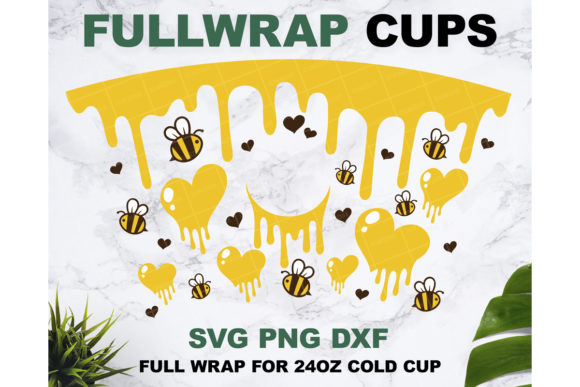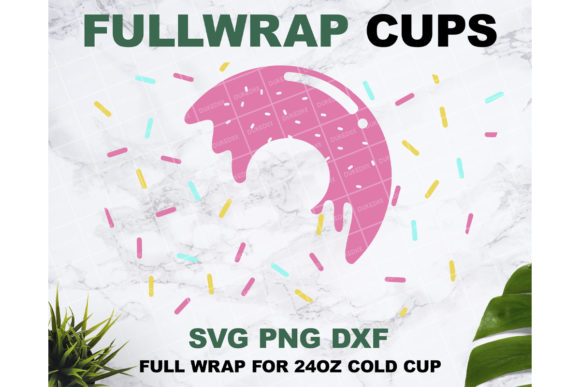
Donut Drip 24 Oz Cup Graphics for Print Templates
I recently downloaded the Donut Drip 24 Oz Starbucks Cup design to test it for a new seasonal product collection I'm preparing for my Etsy shop and Creative Fabrica storefront. My goal was straightforward: find a versatile graphic that could work across multiple product types without requiring hours of rework. This file set arrived as a single zip folder containing SVG, PNG, and DXF formats, which immediately told me the creator understood the practical needs of sellers who work across different software and cutting machines.
What caught my attention first was the visual personality of the design. The donut drip concept has a playful, food-inspired charm that appeals to a specific buyer demographic, namely people who enjoy sweet treat aesthetics, coffee culture merchandise, and handmade gift items. The style leans decorative and slightly whimsical without crossing into childish territory. For a seller targeting the tumbler wrap and personalized cup niche, this sits in a comfortable middle ground that attracts both casual buyers and repeat customers looking for unique drinkware graphics.
Before listing any product publicly, I always run the same testing sequence. I opened the SVG file in Cricut Design Space to check cut lines, imported the PNG into a Canva template for mockup creation, and previewed the DXF to confirm compatibility with Silhouette Studio. All three formats opened cleanly, which saved me the frustration of troubleshooting file corruption before I could even begin designing.
Evaluating the SVG Cut Quality for Tumbler Projects
The SVG file is the backbone of any tumbler wrap or cup design project, and this one held up well under inspection. Lines were clean, nodes were reasonably organized, and there were no stray paths that typically cause cutting errors on vinyl. When I scaled the design to fit a 24 oz Starbucks cup template, the proportions remained intact without distortion. For sellers offering custom cup wraps, this reliability matters because a single bad cut on a customer order can damage your shop reputation and eat into your profit margin with reprint costs.
I tested the cut on both permanent adhesive vinyl and heat transfer vinyl using a Cricut Maker 3. The smaller details, specifically the drip edges and inner curves, required a sharp blade and slower cut speed, but the results were consistent. If you are selling physical cup decals based on this design, I recommend including a note in your listing about recommended cut settings. This small addition to product descriptions can reduce customer questions and returns for sellers who offer the finished decal rather than the digital file.
PNG Transparency and Mockup Presentation
The PNG file came with a transparent background at a resolution that worked well for digital mockup creation. I placed it over several cup mockup photos, including a white ceramic tumbler, a clear glass cold cup, and a matte black stainless steel tumbler. On white backgrounds, the design popped clearly with good contrast. On the dark mockup, I needed to adjust the design slightly by adding a white offset layer behind the graphic to maintain visibility, which is a standard adjustment for any dark substrate product.
For sellers who rely on thumbnail appeal to drive clicks, the way this design photographs in a mockup setting is a genuine advantage. The donut drip pattern reads instantly even at small thumbnail sizes, which is critical for marketplace visibility on Etsy or Creative Fabrica. When buyers scroll through dozens of search results, designs with clear, recognizable silhouettes consistently outperform overly intricate patterns that blur into unrecognizable shapes at thumbnail scale.
Testing Across Product Types Before Committing
My standard evaluation process involves testing a single graphic across at least five product categories before I decide to build an entire collection around it. Here is how the Donut Drip 24 Oz Starbucks Cup performed across the formats I tested:
- Tumbler wraps: Excellent fit. The full wrap layout worked naturally on a 24 oz cup template, and the design wrapped around the circumference without awkward seams or gaps.
- T-shirt graphics: Good performance. The PNG transferred cleanly onto a mockup tee, though I increased the design scale slightly for better visual balance on an adult-sized shirt.
- Printable wall art: Moderate potential. The design works as a framed kitchen print or coffee bar sign, but it needs a complementary background or border to feel complete as a standalone piece of decor.
- Sticker designs: Strong potential. The PNG file cropped into a die-cut sticker shape easily, and the playful aesthetic suits the sticker market well, particularly for planner and laptop decal buyers.
- Greeting cards and invitations: Niche but usable. The design could anchor a coffee-themed birthday card or donut party invitation, though it would need text pairing to function as a complete card front.
This cross-testing revealed that the strongest commercial path for this asset is tumbler wraps and sticker products, with secondary opportunities in apparel and printable decor. For a seller building a cohesive product line, this design can anchor a coffee and donut themed bundle that includes matching cup wraps, coordinating stickers, and a companion t-shirt graphic.
File Organization and Customer Experience Considerations
One detail that separates professional digital product shops from amateur ones is file organization before delivery. The zip folder I received contained clearly labeled files, but I always restructure downloads for my own customers. I recommend renaming files to include the design name, format, and recommended use case. For example, a customer buying a tumbler wrap SVG should not have to guess which file is the correct one for their 24 oz cup template.
If you are reselling this design as part of a physical product or as a licensed digital download, take the extra step of including a brief PDF guide with cut settings, scaling recommendations, and material suggestions. This small addition consistently reduces customer support requests and improves review quality. Buyers who feel guided through the process are more likely to leave positive feedback and return for future purchases.
Commercial Licensing and Usage Boundaries
Before listing any product that incorporates this design, I verified the commercial license terms. The standard expectation for digital design assets sold on marketplaces is that you can use them on finished physical products, such as printed cups, decals, or apparel, without additional royalties. However, reselling the raw digital file as your own creation is typically restricted unless the license explicitly permits it. Always check the specific terms attached to the design, and if the license is unclear, contact the original creator for written clarification before publishing your listing.
For print-on-demand sellers using platforms like Printful, Printify, or Shopify, this design can be uploaded directly to your product catalog once you confirm the license covers POD usage. The PNG format is ready for most POD mockup generators, and the SVG can be used for cut-and-sew products or engraving designs depending on the platform's file requirements.
Where the Design Works Best and Where Caution Is Needed
Based on my testing, this design shines in applications where it can be displayed at a generous scale. Large product previews, full-wrap tumbler mockups, and sticker sheets with prominent placement all benefit from the bold drip pattern. The design also works well in themed bundles where it can be paired with complementary donut or coffee graphics to create a cohesive collection. For seasonal promotions, particularly around Valentine's Day, Mother's Day, or back-to-school coffee gift sets, this design fits naturally into gift-oriented product lines.
However, there are situations where I would use this design carefully or avoid it altogether. The drip details, while charming at full size, can become visually muddy when scaled down to tiny sticker dimensions or used as a small accent on a crowded layout. If you are designing layered Canva templates with heavy text overlays, the decorative nature of the drip pattern can compete with readability rather than supporting it. For Cricut and Silhouette users cutting intricate designs on adhesive vinyl, the thin drip edges require precise cutting conditions, and I would not recommend this design for beginners who are still calibrating their machine settings.
Dark background products also demand an extra step. Without a white underbase or offset layer, the design can lose contrast on black or navy tumblers. I tested this specifically on a matte black cup mockup, and the fix was simple enough, but sellers who skip this step may end up with product photos that look muddy and unprofessional, which directly impacts conversion rates.
Pairing the Design with Typography and Branding Elements
One of the most useful exercises I run with any graphic asset is a font pairing test. This design has a rounded, hand-drawn quality that pairs naturally with playful script fonts and rounded sans serif typefaces. I tested it alongside a bouncy handwritten font for a coffee shop sticker design, and the combination felt cohesive and intentional. When paired with a clean sans serif, the design took on a more modern, minimalist cafe aesthetic that could appeal to a different buyer segment.
For sellers building a brand identity around coffee culture, sweet treats, or handmade gift products, this design can serve as a recognizable visual anchor across multiple product listings. Consistent use of the same graphic language across tumbler wraps, sticker packs, and printable decor helps build brand recognition and perceived value, even if your shop operates entirely on a print-on-demand or digital download model.
Final Assessment Before Publishing a Product Line
After testing the Donut Drip 24 Oz Starbucks Cup across multiple product formats, mockup scenarios, and cutting conditions, I consider it a practical and commercially viable design asset for sellers in the tumbler, sticker, and printable decor niches. The file quality is clean, the formats are well chosen for the target audience of Cricut and Silhouette users, and the visual appeal matches current buyer demand for playful food-themed graphics.
The design does require thoughtful scaling and background preparation for certain products, particularly dark substrates and small-format items. But these are standard adjustments that any experienced seller should already be incorporating into their product development workflow. The time saved by starting with a clean, well-organized file set outweighs the minor adjustments needed for specific applications.
For my own shop, I plan to build a small coffee and donut collection anchored by this tumbler wrap design, supported by matching stickers, a printable coffee bar sign, and a coordinating t-shirt graphic. The bundle approach lets me test multiple product categories simultaneously while maintaining visual consistency, which is the most efficient way to gauge buyer interest before scaling up production or expanding into additional design variations.
If you are a digital product creator, Etsy seller, or print-on-demand designer evaluating this asset for your own shop, I recommend running your own mockup tests on the specific products you plan to sell. Pay attention to how the design reads at thumbnail size, how it holds up on both light and dark backgrounds, and how cleanly your cutting machine handles the drip edges. These practical checks will tell you more than any preview image ever could, and they are the difference between a product that simply lists and one that actually sells.