I'm a Coffee Cat Lover: Graphics & Crafts
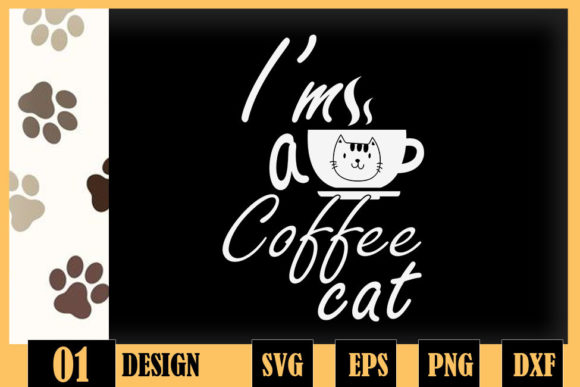
As someone who builds digital product collections for multiple online shops, I’m always testing new graphics to see if they can become reliable sellers. I recently picked up the I m a Coffee Cat Cat Lover Coffee Lover design asset and put it through a full evaluation before committing it to any finished listing. The design immediately clicked with a very specific audience—coffee lovers who also adore cats—and that niche clarity is exactly what I look for when I’m planning a new product drop on Etsy or Creative Fabrica. The artwork has a playful, hand‑drawn personality that feels warm and slightly rustic, but it’s clean enough to work as a bold statement on a mug or a soft accent on a greeting card. It’s not trying to be minimalist or overly polished, and that’s a strength: it feels like a genuine, shareable phrase that fits right into the cozy, comfort‑driven part of the craft market.
First Impressions and the Buyer It Attracts
Opening the folder, I found the main design in multiple formats suitable for Cricut Design Space, Silhouette Studio, Adobe Illustrator, Corel Draw, and Photoshop—exactly what any serious crafter or print‑on‑demand seller needs. The typography blends a casual script with a slightly chunky sans‑serif counterweight, giving the phrase “I’m a coffee cat, cat lover, coffee lover” a rhythmic, almost conversational feel. The visual personality sits somewhere between cute and sassy, which is a sweet spot for impulse buys on mugs, tees, and tote bags. I could easily see this attracting an audience of introverted coffee drinkers, cat‑moms, and people who treat their morning latte as a ritual. It’s the kind of design that shows up in a “Best Friend Gift” search or a “Cat Mom Apparel” collection, and the emotional hook is already baked into the lettering.
How I Tested the Design Before Building a Product Collection
Before I ever list a design‑based product, I run it through a real‑world scenario. I opened a blank project in Cricut Design Space and imported the SVG version of the I m a Coffee Cat Cat Lover Coffee Lover graphic. I checked the cut lines for any unnecessary nodes, made sure the internal gaps were clean for weeding, and resized the design to fit a standard 11oz mug template and a unisex t‑shirt mockup. Then I brought the PNG with transparent background into Photoshop, placed it on a marbled coffee mug mockup, a kraft paper notebook cover, and a dark heathered tote bag. The goal was to see how it performed across the product types I actually sell—printables, sublimation blanks, and sticker sheets. This kind of hands‑on testing tells me much more than a quick preview ever could.
Where the Coffee Cat Graphic Truly Shines
After several rounds of mockup testing, I’m confident this design works best on larger, hero‑style products where the details can breathe. Think 11oz or 15oz mugs, full‑front t‑shirts, canvas tote bags, and 8x10 printable wall art. The phrase has enough visual weight to anchor a composition without needing extra clipart, which makes it a strong candidate for a single‑design listing or a coffee‑lover bundle. I also tested it on a sublimation pillow cover and a round wooden sign; the lettering stayed crisp, and the playful mood instantly elevated the blank product. For sellers who build seasonal collections, this could anchor a fall or holiday coffee series, especially when paired with pumpkin spice or cozy blanket visuals. The design naturally attracts the kind of buyer who shops for “cat mom coffee mug” or “funny coffee lover t‑shirt,” so the SEO potential is solid.
Product Ideas That Fit the Design’s Personality
I never just drop a graphic on a single product and call it a day. I sketched out a quick product map to see how many sellable items this one purchase could support. The I m a Coffee Cat Cat Lover Coffee Lover design adapts beautifully to:
- SVG products – ready‑to‑cut files for Cricut and Silhouette crafters who want to make their own mugs, totes, and apparel.
- Print‑on‑demand merchandise – t‑shirts, hoodies, crewnecks, and tote bags listed on platforms like Printful or Redbubble.
- Sublimation designs – tumblers, mugs, pillow covers, and kitchen towels, especially when mirrored and sized for press templates.
- Printable wall art – instant download digital prints for a coffee bar or kitchen gallery wall.
- Sticker sets and planner decals – resized PNGs for kiss‑cut sheets or single stickers sold on Etsy.
- Canva template elements – the transparent PNG can be dropped into social media templates, Pinterest pins, or blog graphics.
- Greeting cards and invitation accents – scaled down for a card front or a playful event invitation.
Each of these product types taps into a different buyer intent, and the design’s flexibility means I can create a cohesive collection rather than a single isolated listing. That’s a huge advantage for building a brand perception of quality and abundance.
Where to Use the Design Carefully
No graphic is universally perfect, and this one deserves a few practical cautions. I noticed that on very small items—like 1.5‑inch button pins or tiny planner stickers—the thinner script strokes become fragile and hard to read. For Cricut and Silhouette users, cutting the design at less than 3 inches wide can cause the internal loops and fine connectors to tear or fail to weed cleanly. I’d strongly recommend setting a minimum size of 3.5 inches for cut projects. On dark backgrounds, the standard black or dark grey version loses contrast shockingly fast; sellers should either provide a white outline version or use a light‑colored ink for sublimation. Also, avoid placing this design on overly busy photographic backgrounds in thumbnails—the lettering needs space to be the clear focal point, or it gets lost in the composition.
Mockup Presentation and Thumbnail Appeal
One of the first things I check is how a design photographs in a mockup. I tested the I m a Coffee Cat Cat Lover Coffee Lover graphic on a bright white mug with a subtle shadow, and the contrast was excellent. Then I swapped it onto a soft blush pink tote bag, and the whole mood shifted toward a feminine, gift‑ready feel. That versatility means I can target different buyer personas simply by changing the mockup background. For my Etsy listings, I’ll likely use lifestyle mockups with a steaming coffee cup and a cat curled nearby—those storytelling visuals often increase click‑through rates. The design’s typography is distinct enough to create a recognizable thumbnail even at small sizes, which is a huge plus for marketplace visibility. I’d recommend sellers test the design on at least three different product mockups before publishing, and always check how it reads at 200x200 pixels.
Technical Checks for a Smooth Customer Experience
When I sell digital downloads, I’m not just selling a design; I’m selling the promise of a hassle‑free project. So I ran a full technical check: the PNG had a clean transparent background, the SVG had no clipping masks or stray points, and the file resolution was at least 300 DPI for print. I also organized the file bundle into clearly labeled folders—SVG, PNG, EPS, DXF, and a PDF instruction sheet. This might seem like a small thing, but it dramatically reduces customer questions and returns. I paired the design with a few font suggestions for sellers who want to create complementary text: a soft serif for a bookish coffee vibe, a clean sans serif for modern mug designs, a handwritten script for matching journaling cards, and a slightly retro display font for a playful coffee shop aesthetic. When you deliver a complete, well‑structured package, your shop’s reviews reflect that care.
Commercial Licensing and Selling Safety
Before you list a single product, read the license file that comes with the I m a Coffee Cat Cat Lover Coffee Lover graphic. Most commercial designs allow you to sell physical products like mugs, shirts, and printed wall art, but not all permit reselling the digital file itself. I always verify that I can use the design on print‑on‑demand services and in Canva templates, because those are two of my biggest revenue streams. If the license doesn’t explicitly cover digital resale or template use, I reach out to the designer or skip that avenue. I also keep a copy of the license in my project folder so I can reference it quickly. This one step has saved me from potential copyright strikes more than once.
Building a Cohesive Collection with One Strong Graphic
What I like most about the I m a Coffee Cat Cat Lover Coffee Lover asset is that it can anchor a themed collection. I’m already planning to pair it with a few matching coffee bean illustrations, some paw‑print icons, and a “But First, Coffee” decal design to create a coffee cat lovers bundle. That kind of product grouping increases average order value and gives customers a reason to buy multiple items. For digital product creators, a single graphic that sparks a whole collection idea is a goldmine. I’ll test the bundle on Etsy as a set of printable wall art, a sublimation mug pack, and a craft cut file collection—all linked by the same visual personality. This approach also helps with brand consistency: my shop starts to feel like a curated destination rather than a random assortment of files.
Final Practical Notes for Sellers
Here’s a quick checklist I’d follow when working with this design:
- Test the SVG cut on cardstock and vinyl at multiple sizes to confirm weedability.
- Print a sample on matte paper to check color accuracy—screen colors can differ from ink.
- Mock up the design on a white, a cream, and a dark background to see where it needs a white outline.
- Preview the thumbnail at 570x456 pixels (Etsy’s recommended size) to confirm readability.
- Organize the final files into a clean zip folder with obvious naming conventions.
- Include a quick visual guide in the listing images showing the design on real products, not just a flat graphic.
- Check the license for all the platforms you plan to sell on, including print‑on‑demand and template marketplaces.
The I m a Coffee Cat Cat Lover Coffee Lover design is not a magic wand, but it’s a well‑targeted, emotionally resonant graphic that speaks directly to a loyal niche. If you’re willing to test it, mock it up properly, and build a cohesive product story around it, this single asset can support a surprising variety of sellable items. For digital sellers who focus on crafts, printables, and everyday merchandise, it’s the kind of design that earns its place in a bestseller collection.